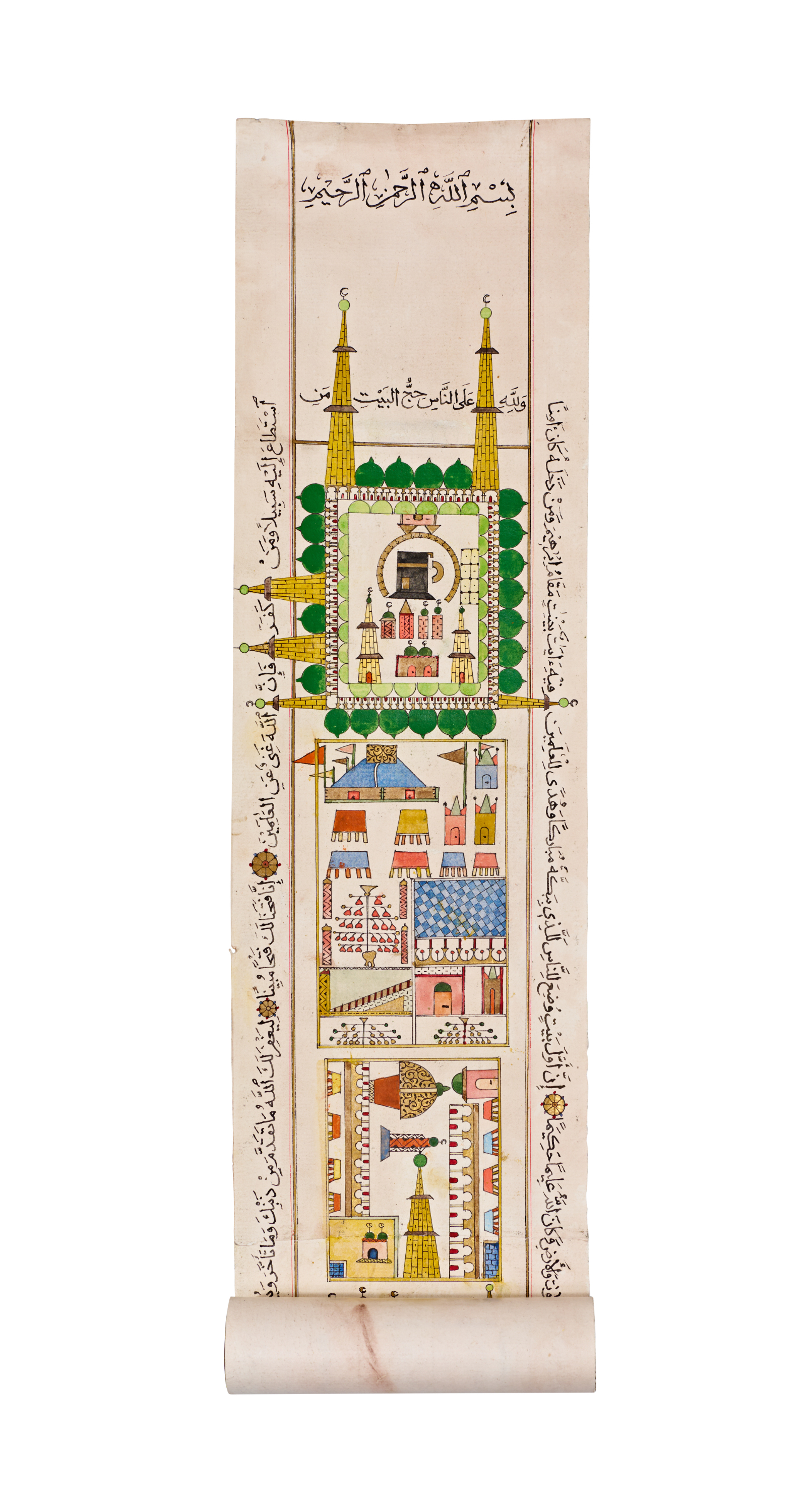
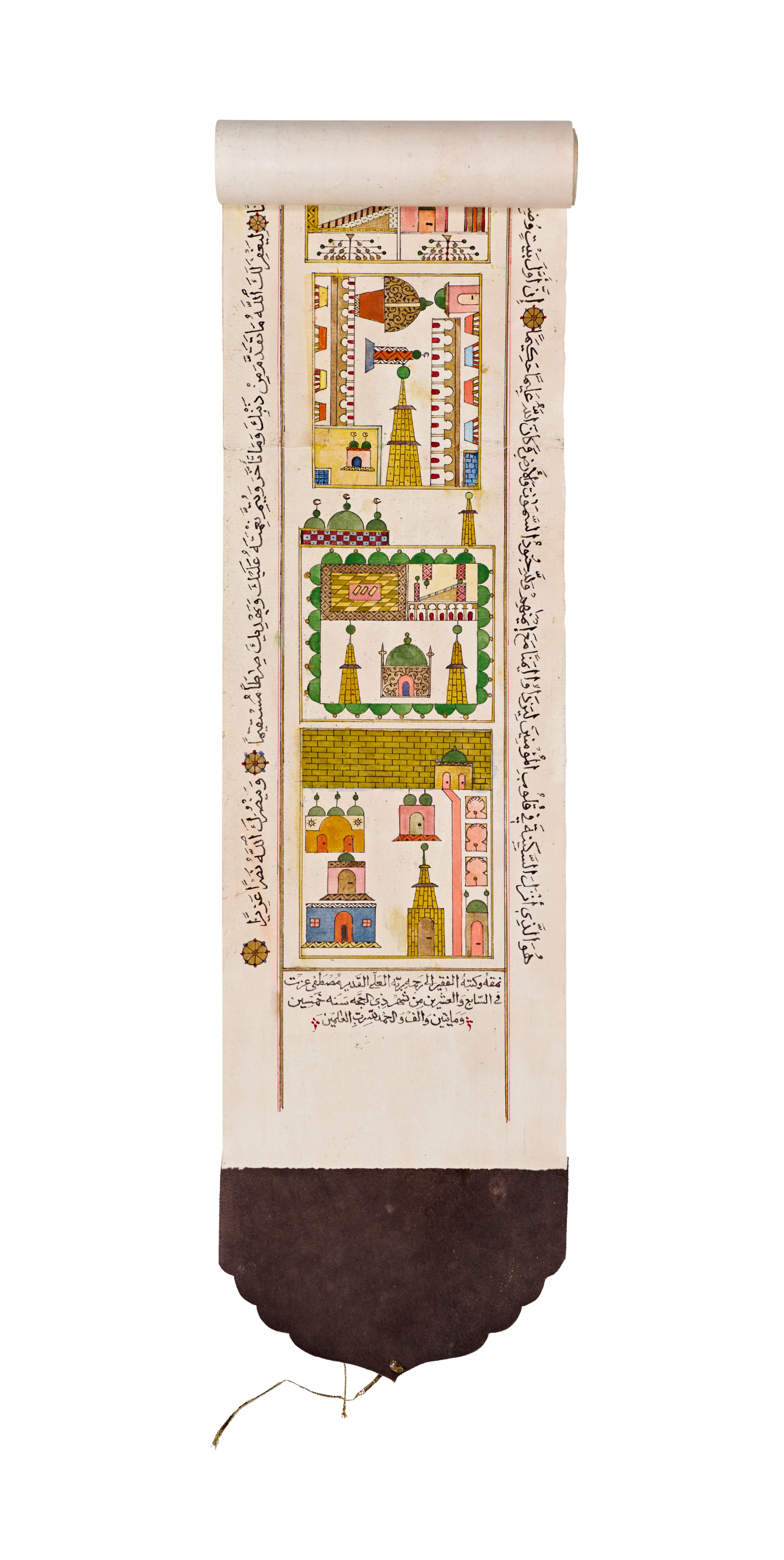
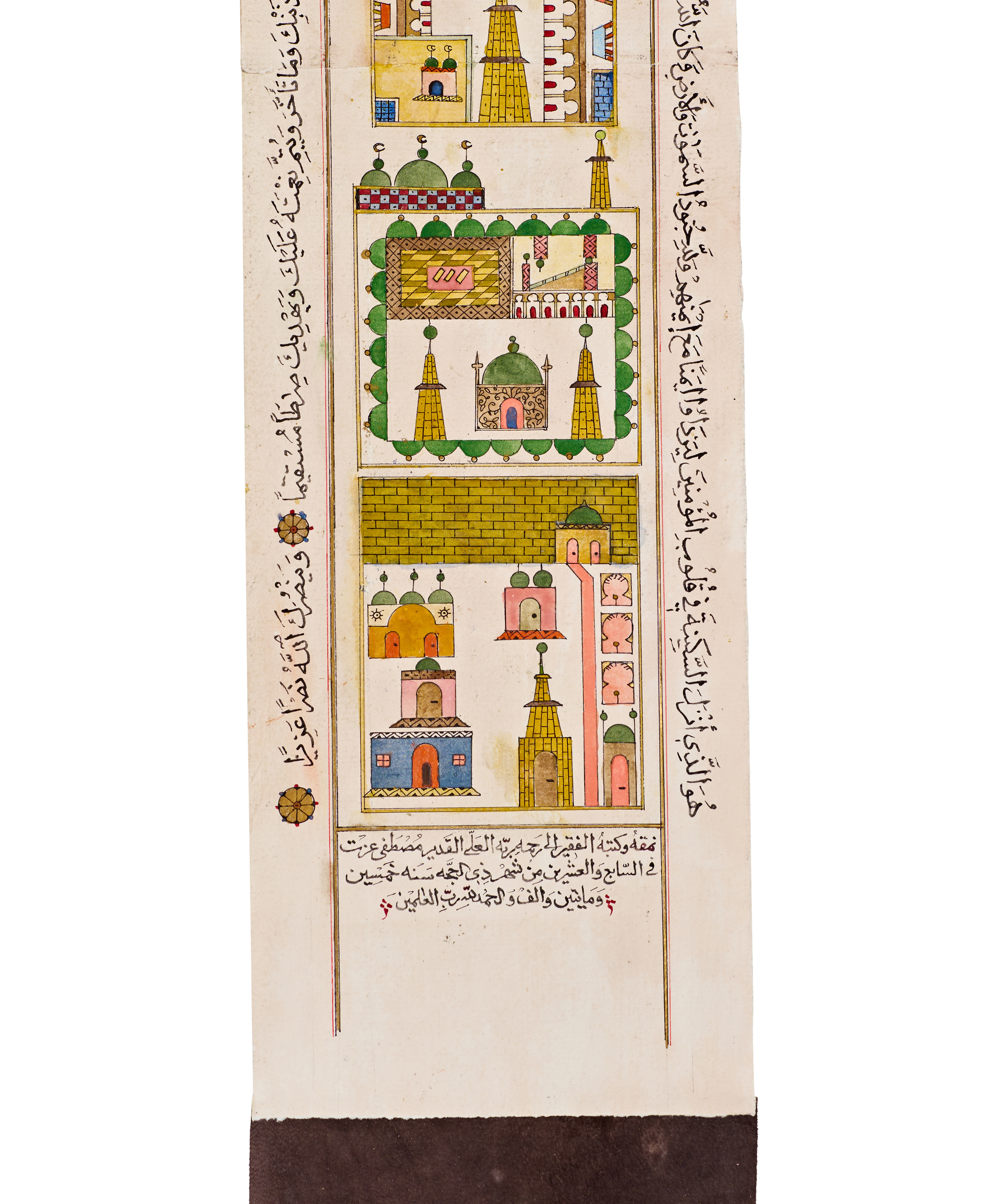
This exceptionally well-preserved illuminated Hajj map scroll presents a beautifully detailed visual guide to the holy sites associated with the pilgrimage. Signed by the artist Mustafa Izat and dated 1250 AH, the scroll unfolds vertically to reveal a sequence of vibrant architectural illustrations rendered in rich tones of green, yellow, red, and blue.
At the top appears an invocation in elegant Arabic script, followed by a finely drawn depiction of the Masjid al-Haram with the Kaʿba at its center, framed by minarets and encircled by bright green domes. Below, additional sacred locations are illustrated, including the Prophet’s Mosque in Medina and other significant landmarks traditionally represented in Hajj route manuscripts. The scenes are separated into rectangular panels bordered by thin red and black lines, while explanatory inscriptions run along both margins in graceful calligraphy.
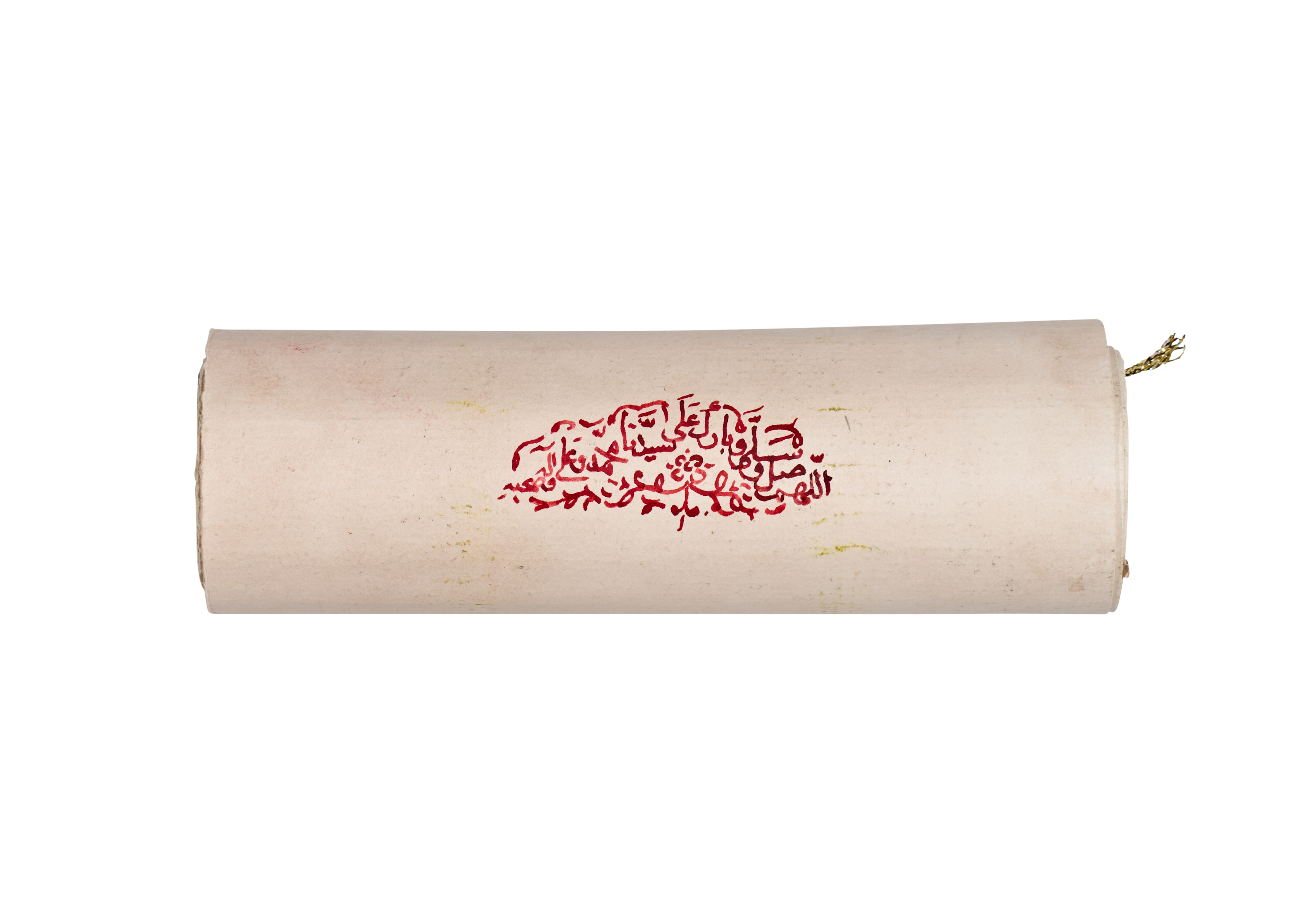
The lower portion of the scroll concludes with a dedicatory text, and the reverse bears a striking red seal impression or inscription. The scroll ends with its original scalloped leather backing and a cord for securing the rolled manuscript, both features typical of Ottoman and late Islamic devotional scrolls.
A refined and visually engaging example of 19th-century pilgrimage art, this scroll represents both devotional expression and cartographic tradition, making it a remarkable addition to collections of Islamic manuscripts, religious art, or historical Hajj memorabilia.