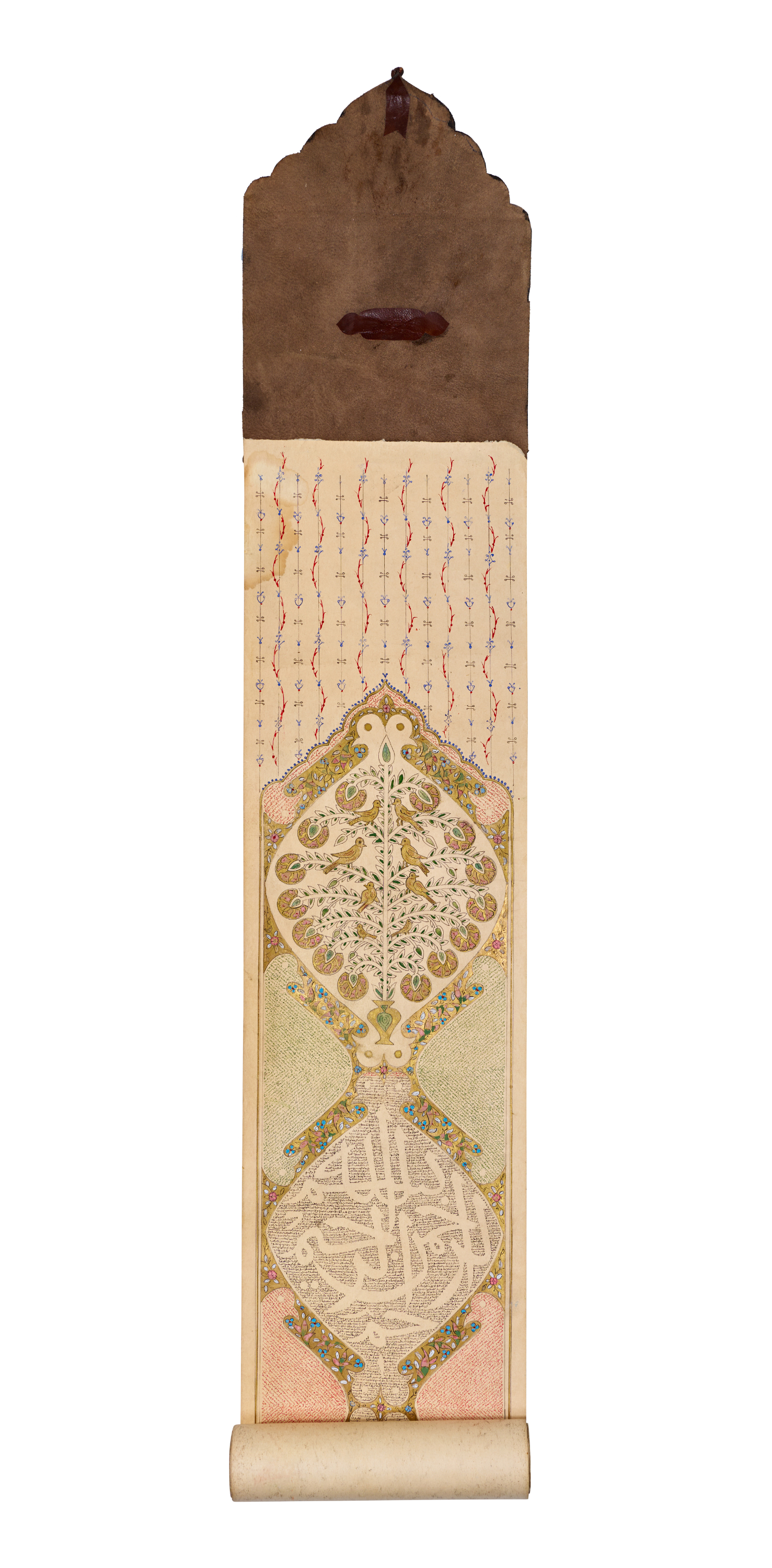
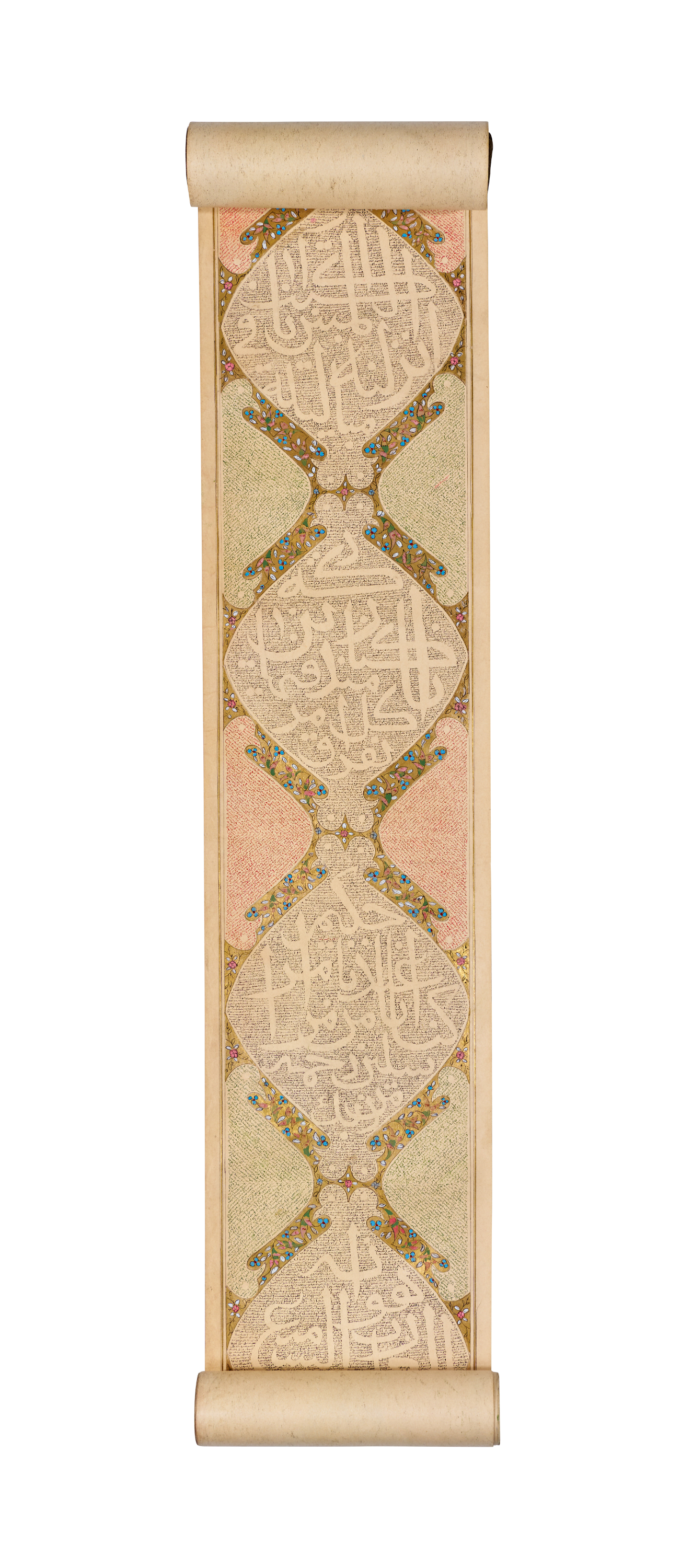
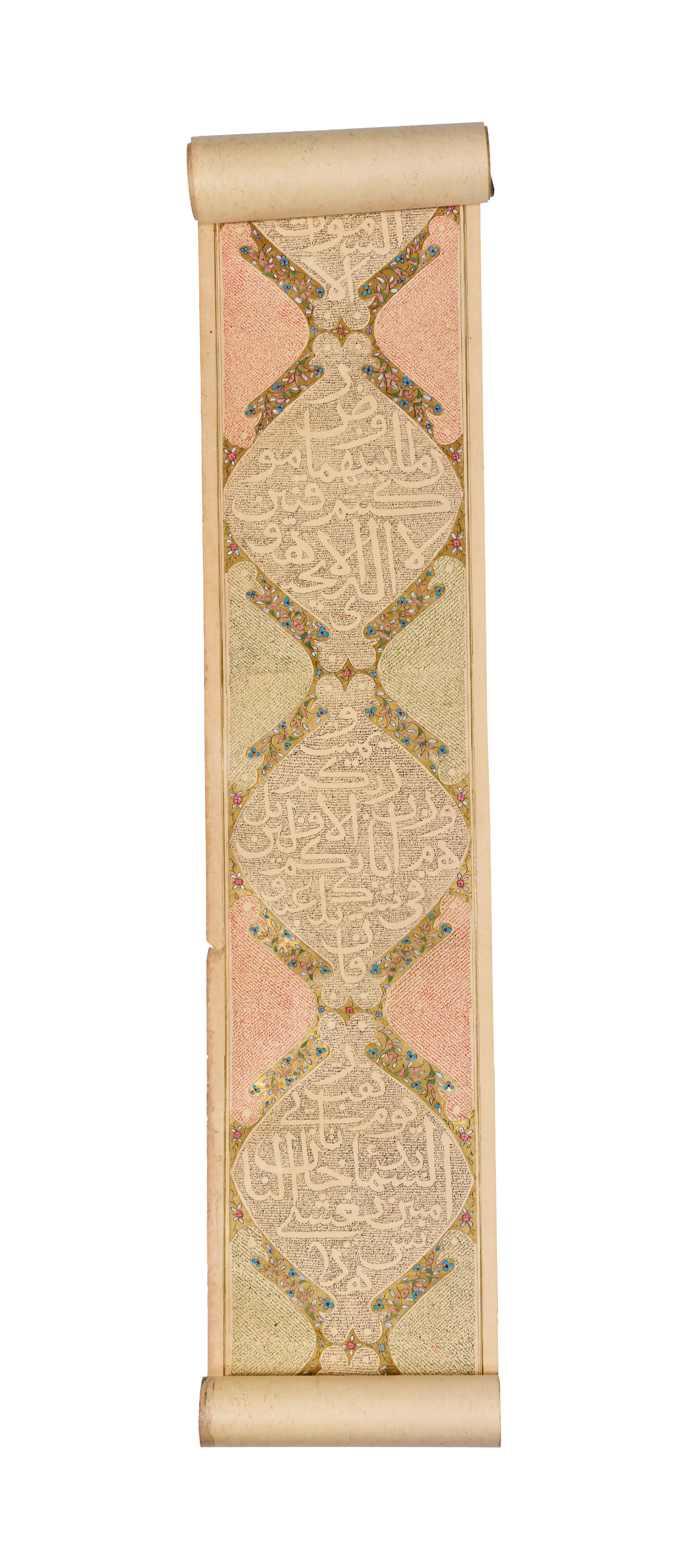
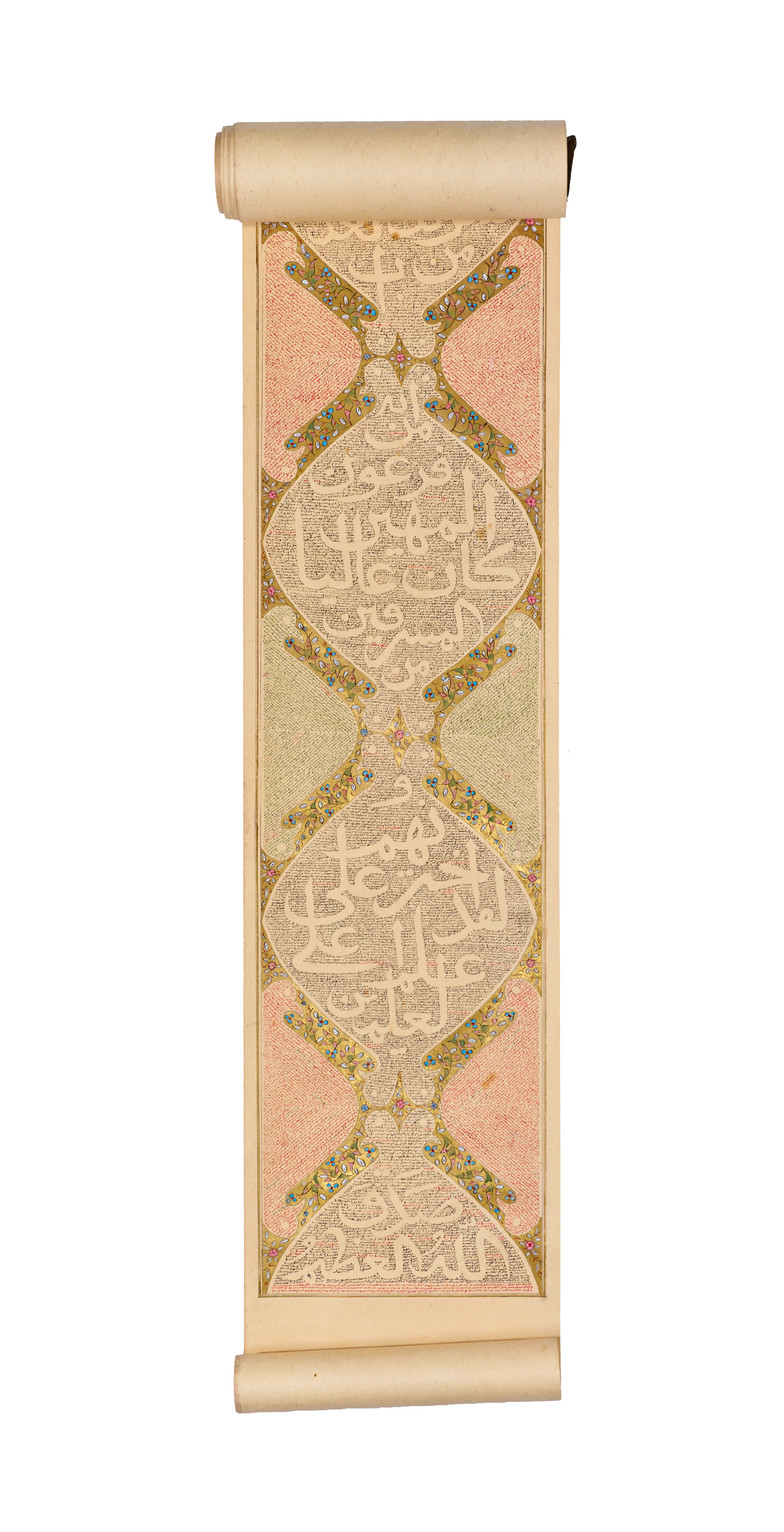
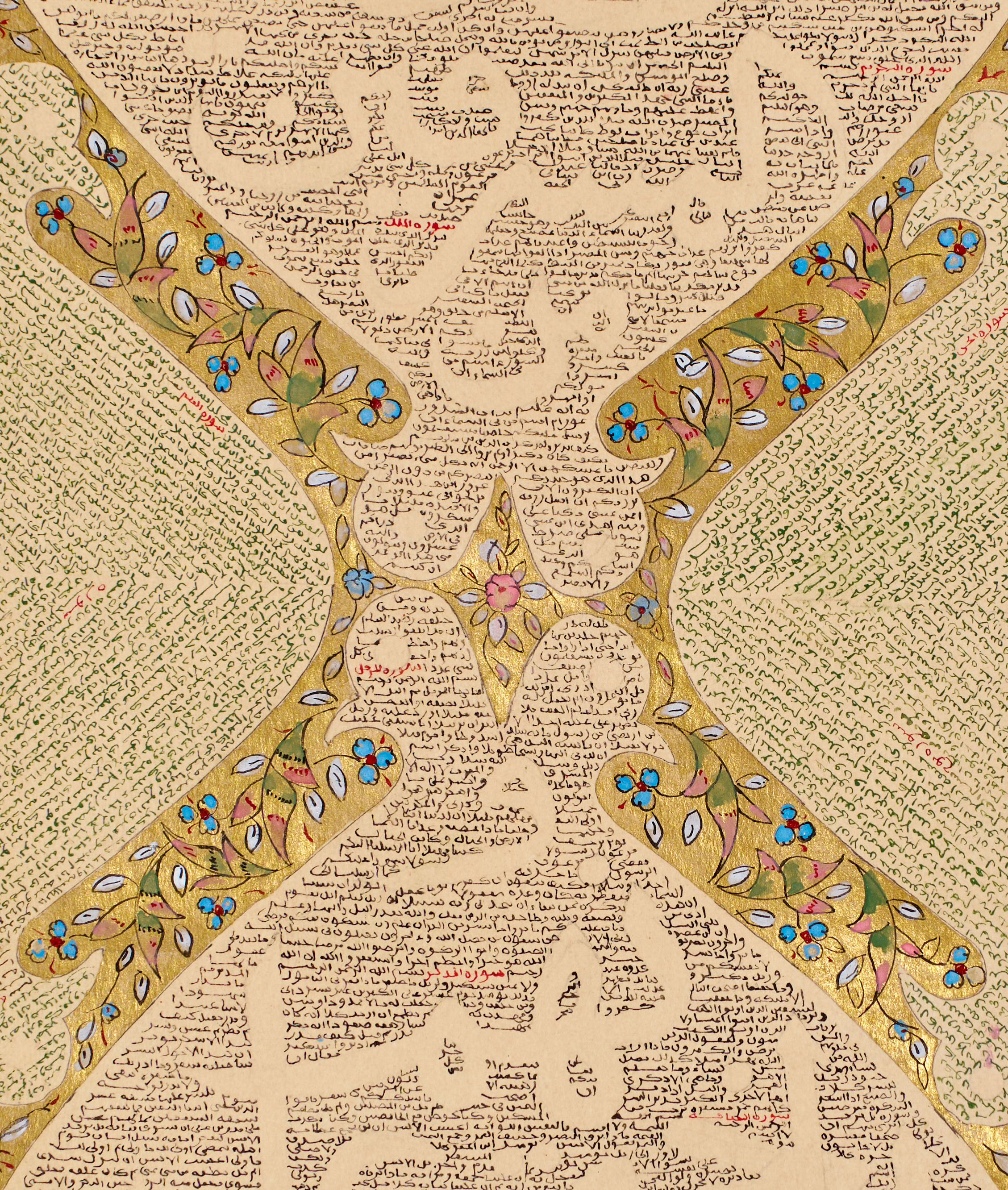
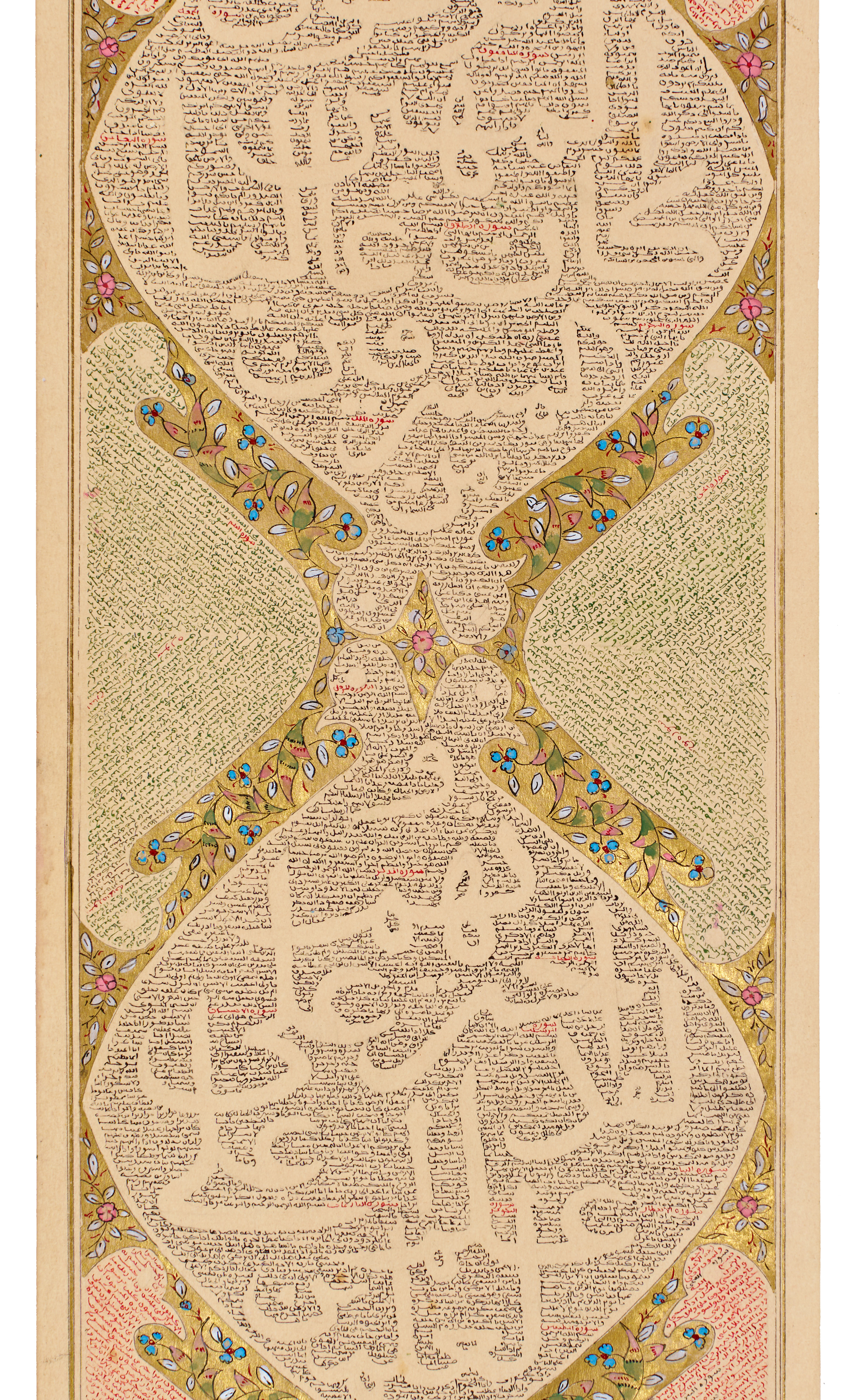
A remarkable and fully illuminated Qur’an scroll, executed with extraordinary precision and artistic refinement by the calligrapher Maryam bint al-Shaikh Ibrahim al-Hasani, an unusual and highly significant example of a complete Qur’anic manuscript produced by a female scribe. The scroll is composed of multiple contiguous panels of cream paper, meticulously inscribed in exceptionally fine naskh script, with larger phrases formed in bold outlined calligraphy filled with dense micro-text.
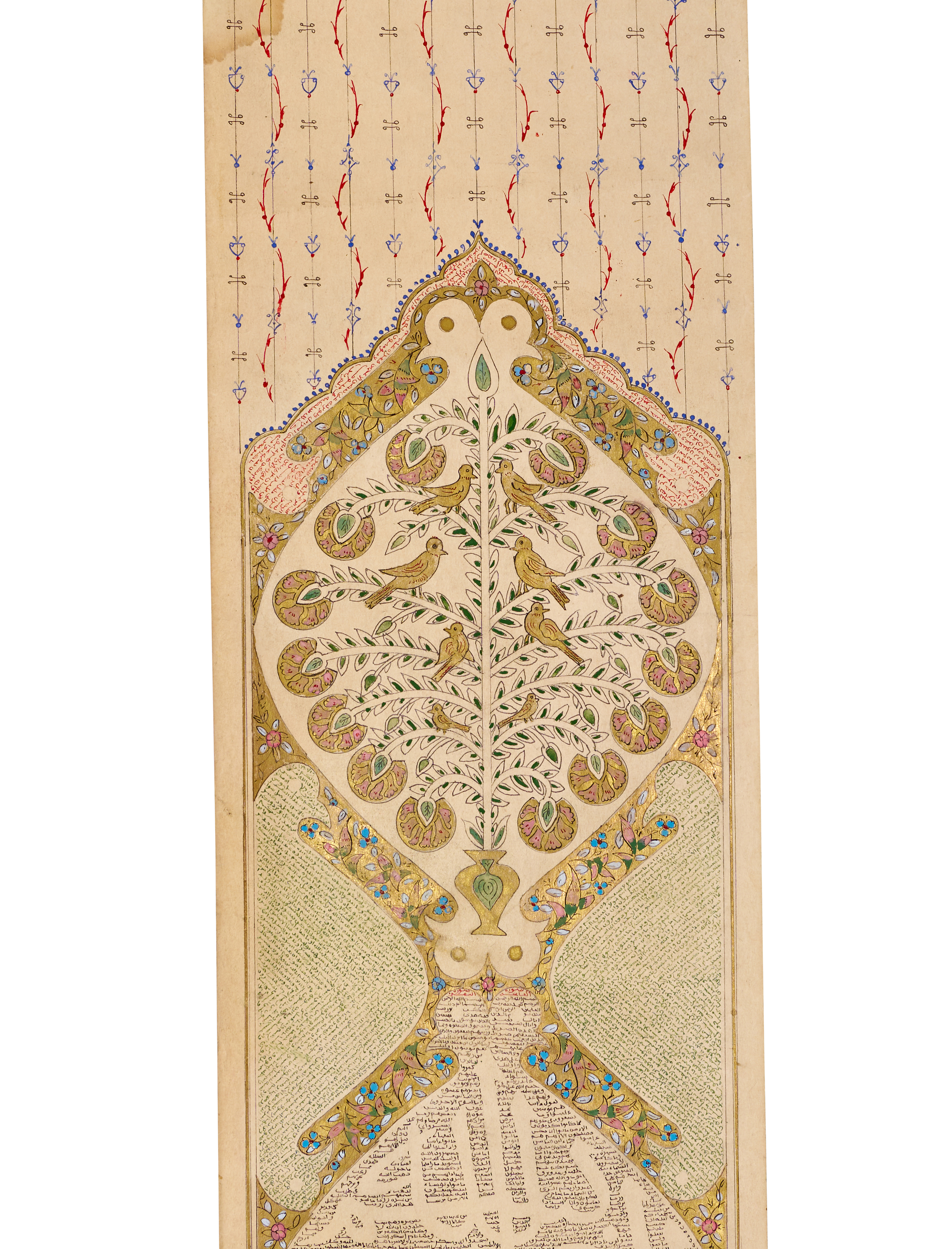
The upper section is adorned with a scalloped leather terminal, likely functioning as a protective cover when the scroll is rolled. Beneath this, delicate repeating motifs in red, blue, and gold form an elegant introductory panel that leads into the illuminated composition. The opening design features a large Tree of Paradise motif populated with stylized birds, rendered in soft greens, reds, and blues, framed within a gold border enriched with floral arabesques heightened with polychrome pigments and touches of blue mineral pigment.
The Qur’anic text unfolds along the length of the scroll in a sequence of symmetrical almond-shaped medallions, each outlined in lavish gilt floral bands and filled with immaculate micro-calligraphy. These medallions alternate between pastel grounds—rose, pale green, and ivory—creating a rhythmic and visually harmonious progression. The script remains remarkably consistent throughout, demonstrating both technical mastery and deep devotional intent. Sections of rubrication in red punctuate the dense black script, guiding the recitation and structuring the textual flow.
The illumination reveals a careful balance between traditional manuscript aesthetics and the artistic sensibilities of the 20th century. The palette is refined, with gold heavily employed to emphasize sacred passages and to unify the decorative scheme. The floral marginal designs, with their turquoise blossoms and gilded leaves, exhibit a graceful interplay between geometry and organic forms.
Qur’an scrolls of this scale are rare, and those fully illuminated—and attributed to a named female calligrapher—are exceptional. This manuscript represents a significant testament to the enduring tradition of Qur’anic calligraphy and the vital but often overlooked role of women in manuscript production.
A beautifully preserved devotional object of considerable artistic, cultural, and historical value.